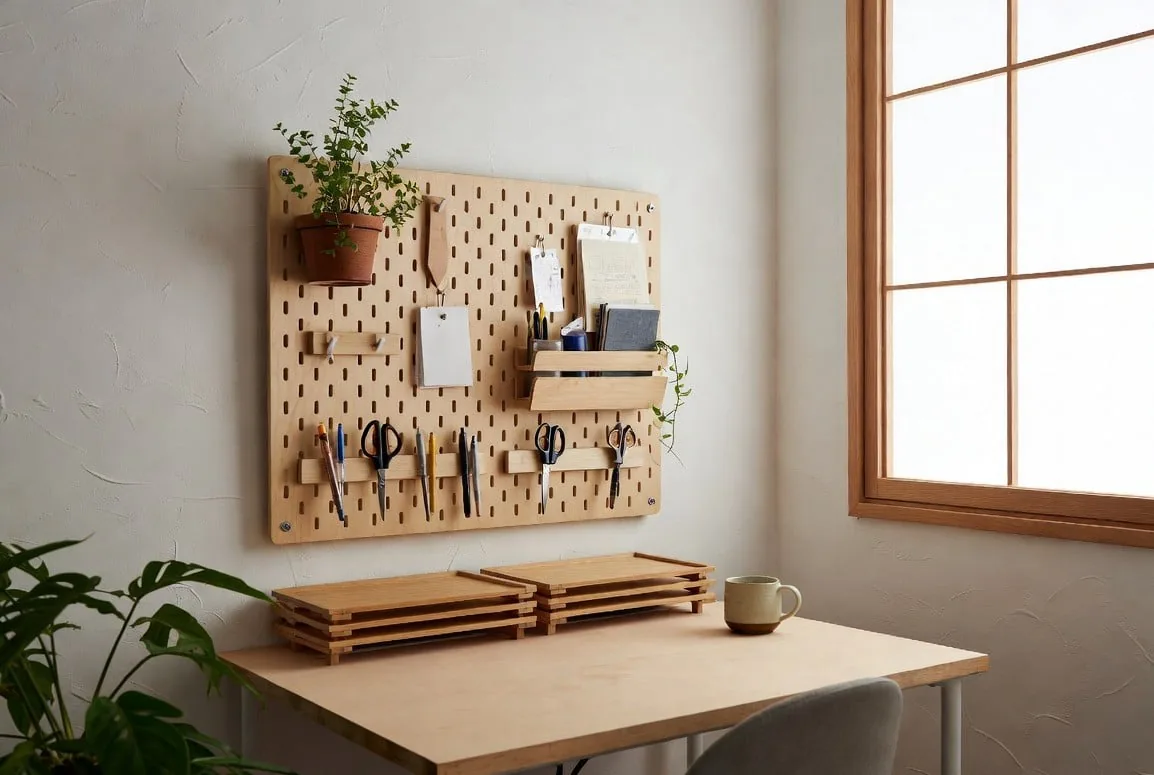
Hidden Storage, Visible Calm: Vertical Desk Organization Hacks
When space is tight, the only option is to move upward. Organizing your desk vertically transforms empty walls, cabinet doors, and even the sides of bookshelves into powerful storage areas. The first step is observation: stand and look at the vertical surfaces within reach of your chair. Most people only see walls. But every square inch can accommodate a pen, a cable, or a notepad. In a small Japanese apartment, this realization changes everything about organizing your home workspace. You stop fighting for desk space and start building upward.
Start with the area directly above the monitor. A simple spacer rod with small hooks can hold scissors, rulers, and hanging notepads. If you prefer not to drill holes, use adhesive clips or hanging shelves designed for lightweight items. The goal is to make your primary work surface appear nearly empty. Every item hanging on the wall is one less thing competing for elbow room. This approach to desk organization also improves comfort because your eyes travel less between tools. You look up rather than to the sides, which helps maintain a more upright spine.
Next, take a look at the back of your monitor or laptop stand. This hidden area is ideal for organizing cables and storing small items. Attach a mesh pouch or magnetic strip to store spare USB cables, a small notepad, or a folding ruler. Don't hide your everyday tools in drawers where you can't see them. Vertical desk organization is most effective when everything is visible at a glance. In a well-designed home office, never open more than one drawer per workday. If you open more, your system is failing you.
Next, consider the sides of your desk legs or the edges of a nearby shelf. Small magnetic hooks can hold scissors, a lint roller, or keys. A horizontal rod between two cabinet doors creates a hanging shelf for spray bottles or tablets. These solutions cost virtually nothing and require no permanent modifications to your rental apartment. Many people overlook these micro-spaces, but together they provide serious workspace comfort. When every small item has a vertical home, your surface stays clean without feeling empty.
High humidity and dust are real problems in Japan, so choose your materials carefully. In damp weather, avoid fabric bags—they trap moisture. Instead, use ventilated metal baskets or clear acrylic shelves. Leave small gaps between stacked items to allow air to circulate. A vertical desk organization system that works in winter may be ineffective in the summer without air circulation. Test your system during a rainy week. If something feels sticky or musty, replace it with a more breathable solution. Your home workspace should adapt to the seasons, not fight them.
The final tip is a weekly vertical check. Every Sunday evening, look at your wall shelves and remove anything you haven't touched in the last five workdays. Move these items to a deeper storage area elsewhere in your home. Vertical space is too precious for rarely used tools. Keep only the ten most essential items you use daily. This habit turns your desk organization into a living system, not a static decoration. Within a month, your eyes will naturally scan upward, without thinking. And your desk surface will remain so clear, guests will ask how you do it. Now you have the answer: you looked up.